
Indie launch · Preview
한국어Trust the Dice or Buy the Roll? — HARMA Early Access Preview
IndirectShine, a Korea–Japan team led by two Korean developers, brings its pixel-art dark fantasy deckbuilder to Steam Early Access on November 17. It sits at #74 on Steam’s Popular Upcoming list. We looked at the two bets it makes in a crowded genre — combat built around managing probability, and co-op.
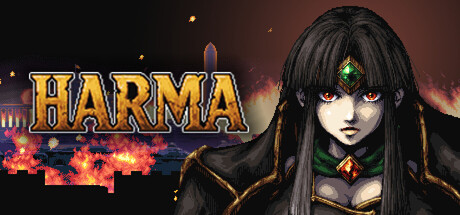
In most deckbuilders, a card’s number is a number. If it says ‘Deal 6 damage,’ you deal 6. HARMA works differently. Its basic attack, Slash, reads ‘Deal (6/12/20) damage.’ Which number you get depends on whether three artifacts succeed at ‘tuning’ the moment you play the card — and you can spend Focus to lock that outcome in. Trust the dice, or buy the roll: every fight in HARMA starts with that question.
Source: Steam store search and store API (games only) · GameBus count, Nov 11, 2026
The deckbuilder market grew tenfold in four years
In 2019, the year Slay the Spire left Early Access, 19 new games carried Steam’s Roguelike Deckbuilder tag. That rose to 84 in 2023 and 225 in 2025 — and 476 in 2026 through November 11, roughly ten times the 2022 figure of 48. The climb got steeper after Balatro’s breakout in 2024.
* 2026 is through November 11. Tags are applied by users, so recent counts can shift — read this for direction rather than exact size.
Source: Steam store search (tags=Roguelike Deckbuilder, games only) · GameBus count, Nov 11, 2026
Demand is real: the genre’s leaders have tens of thousands to over 200,000 Steam reviews. Competition is fiercer. In our count, 356 of 1,061 games (34%) had fewer than 10 English reviews, and only 75 (7%) passed 1,000. A new deckbuilder has to prove what makes it different within its first week.
Review counts are all languages; positive share is Steam’s English-review summary. Highlighted rows support online co-op.
Source: Steam store API · Steam search summaries · retrieved Nov 11, 2026
Hook #1: card power rides on artifact ‘tuning’
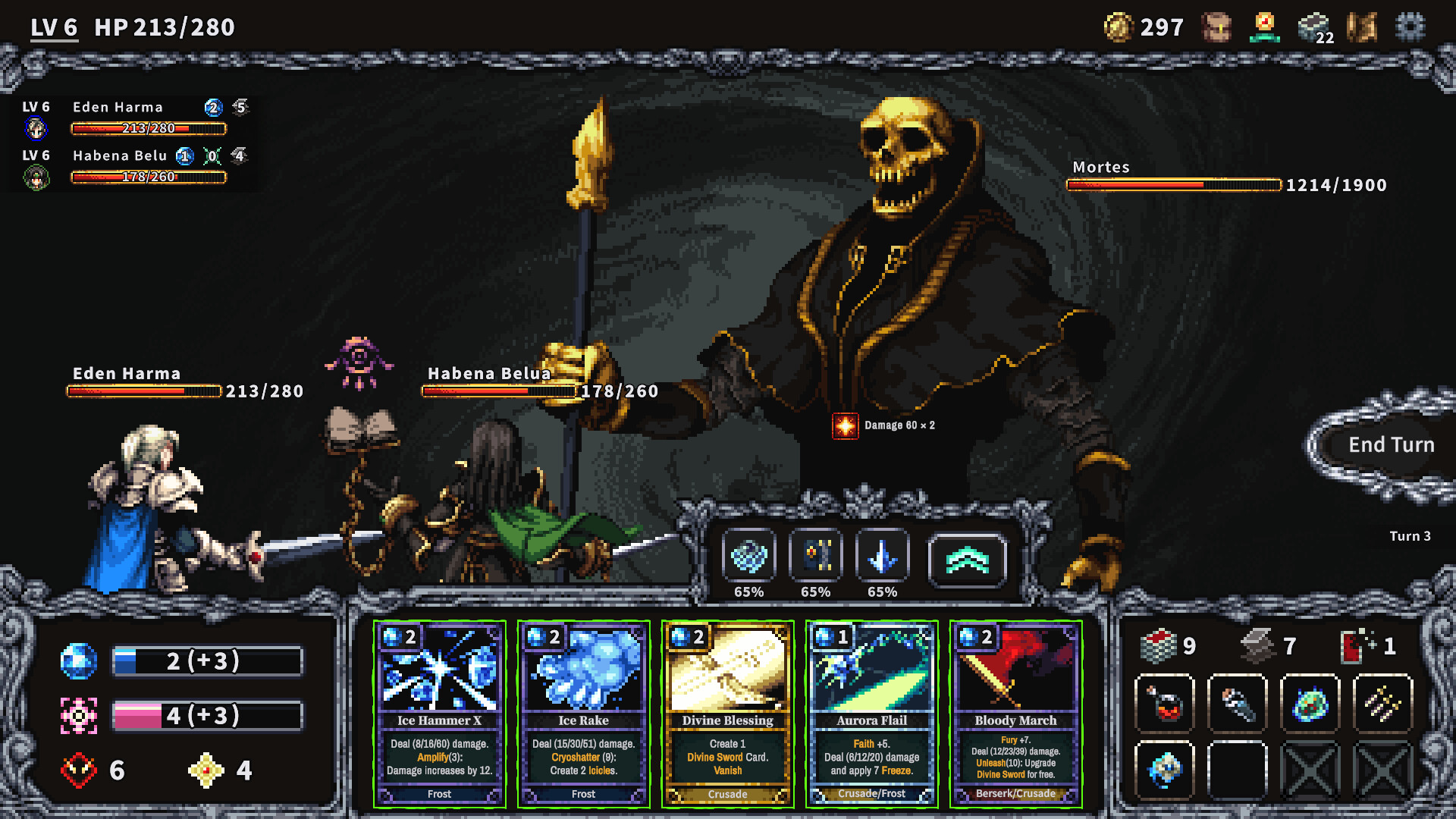
HARMA’s combat screen shows three artifacts, each with a tuning chance. Every time you play a card, each artifact rolls success or failure, and the result picks one of the three values printed on the card. Hit all three and the card fires at full power. Spend Focus and you can force a tuning to succeed. Focus is limited, so when to spend it — and when to save it — is the strategy.
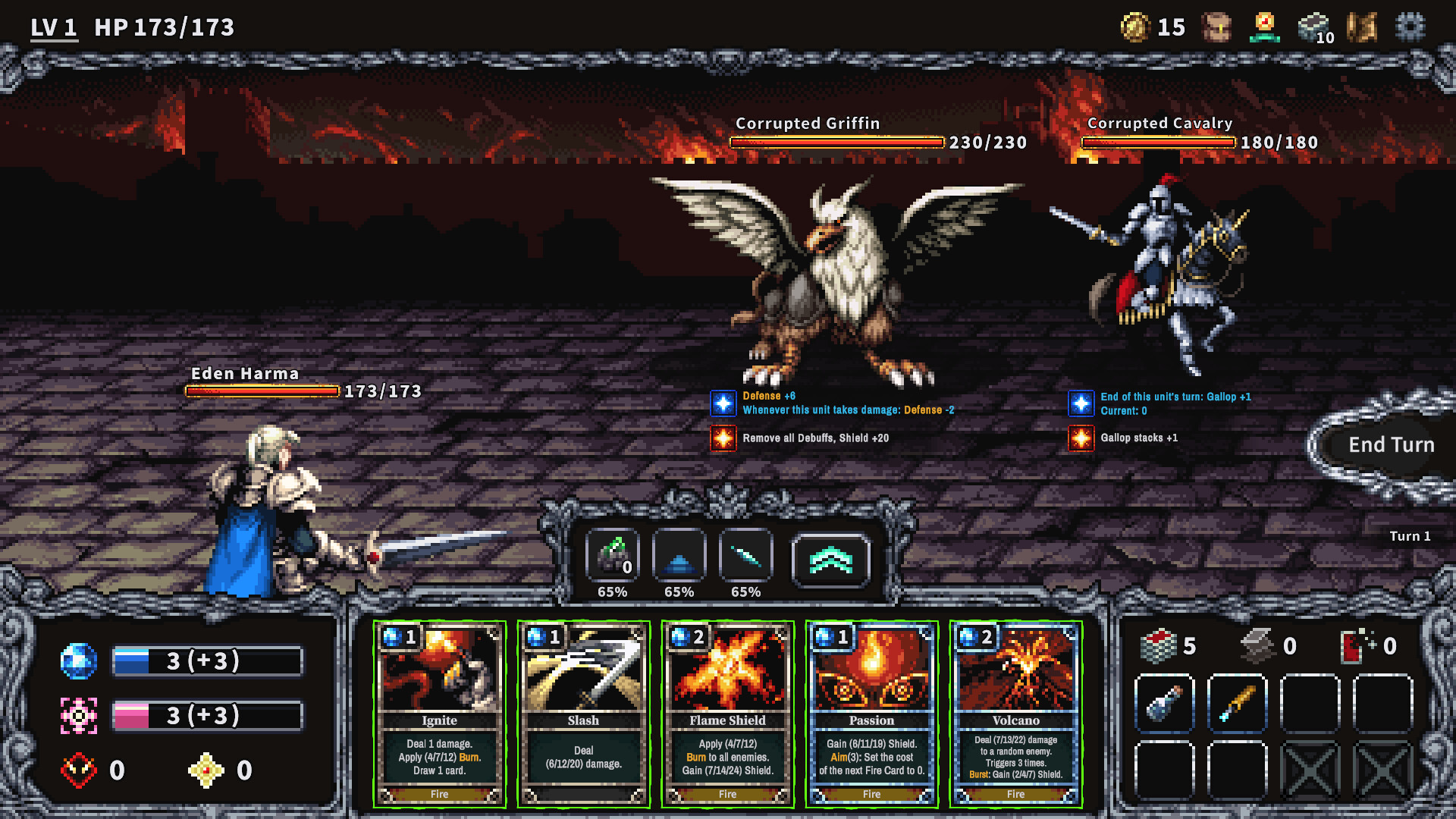
Plug in the 65% tuning chance shown in the screenshot and the odds of all three succeeding on luck alone come to 27.5% — three times out of four, you won’t get the top value. Focus turns that 27.5% into 100% at the moment you choose: right before a boss’s big hit, or on the turn you can close out a fight. The lower the odds, the more Focus is worth.
Assumes three independent 65% rolls (binomial). Actual odds vary with artifacts, upgrades and effects.
Source: GameBus calculation from the odds shown in Steam store screenshots
Artifacts bend those odds further. According to AUTOMATON, the ‘Small Pocket’ raises tuning success by 8% when you spend Focus, and the ‘Rough Sapphire’ refunds 1 MP every five successful tunings. You build around probability-shaping gear, not just cards. The developer counts more than 300 cards and artifacts.
| Typical roguelike deckbuilder | HARMA | |
|---|---|---|
| Card power | Fixed printed values (raised by upgrades) | Three tiers, set by three artifact tuning rolls |
| Handling luck | Draw order and reward picks | + tuning odds, with Focus to guarantee success |
| Players | Mostly solo (4 of the top 100 support online co-op) | Solo + online co-op (2 in demo, up to 4 planned) |
| Story | Varies, often minimal | Four-act story mode with cinematic cutscenes |
| Replay mode | Difficulty tiers, etc. | Story-free combat mode, ‘Dimensional Rift’ |
| Progression | Card upgrades, relics | X/Y upgrade branches · card fusion · altars · per-character talent trees |
‘Typical’ summarizes common structures among leading Steam roguelike deckbuilders and won’t apply to every game. HARMA details are from its Steam page and AUTOMATON’s report.
Hook #2: a deckbuilder you play together
Roguelike deckbuilders are a solo genre. In our count, only 4 of the top 100 games by English reviews list online co-op on Steam — Slay the Spire 2, Across the Obelisk, HELLCARD and Witch’s Apocalyptic Journey. Slay the Spire 2, which shipped with co-op, passed 210,000 reviews within eight months. The appetite for co-op deckbuilding is proven; the shelf is still thin.
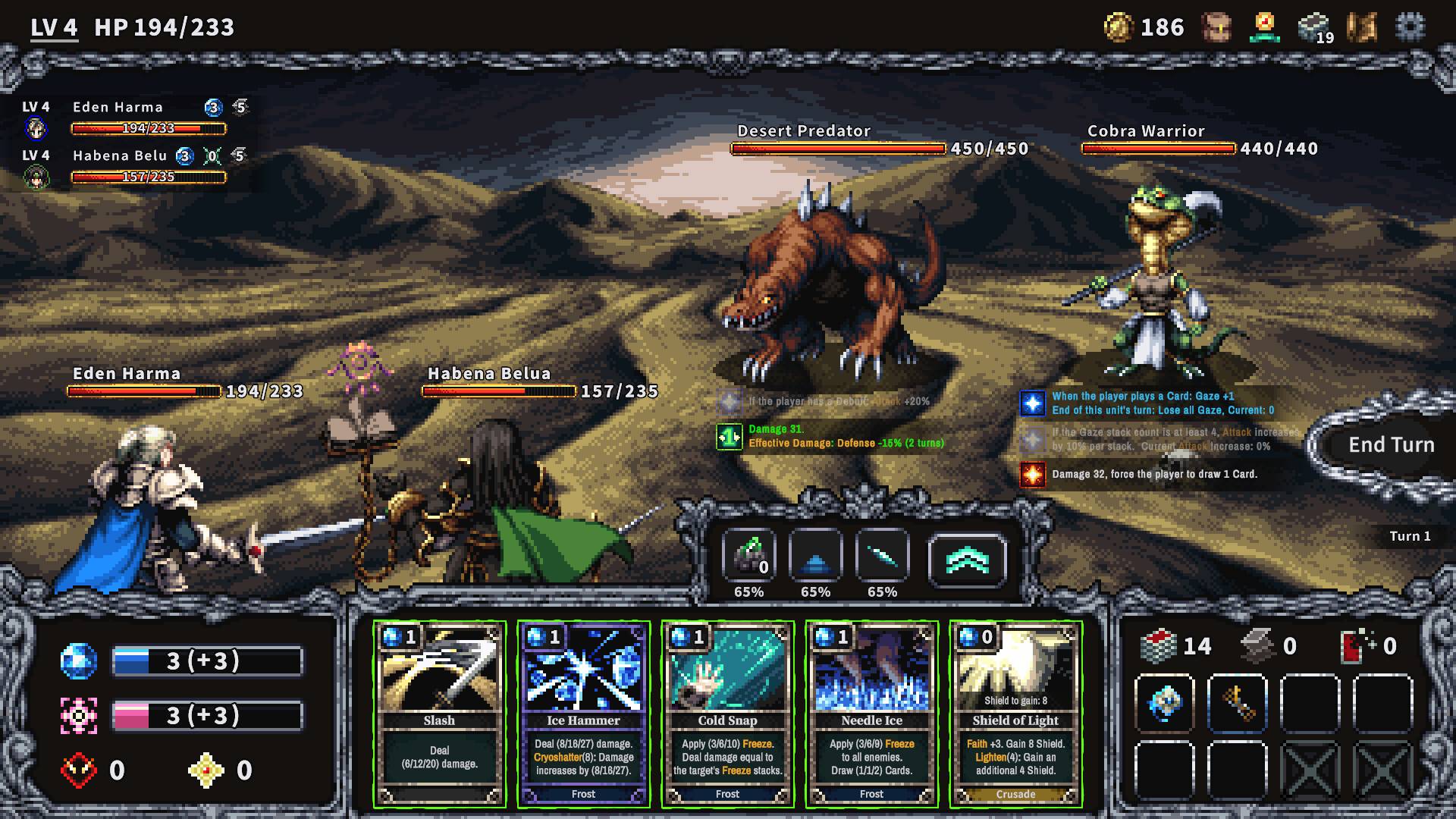
HARMA aims at that gap. The current demo supports two-player online co-op, and the full release is planned for up to four. There are two playable characters, sword-wielding prince Eden Harma and Habena Belua — shown fighting side by side against a Desert Predator and a Cobra Warrior in the screenshots.
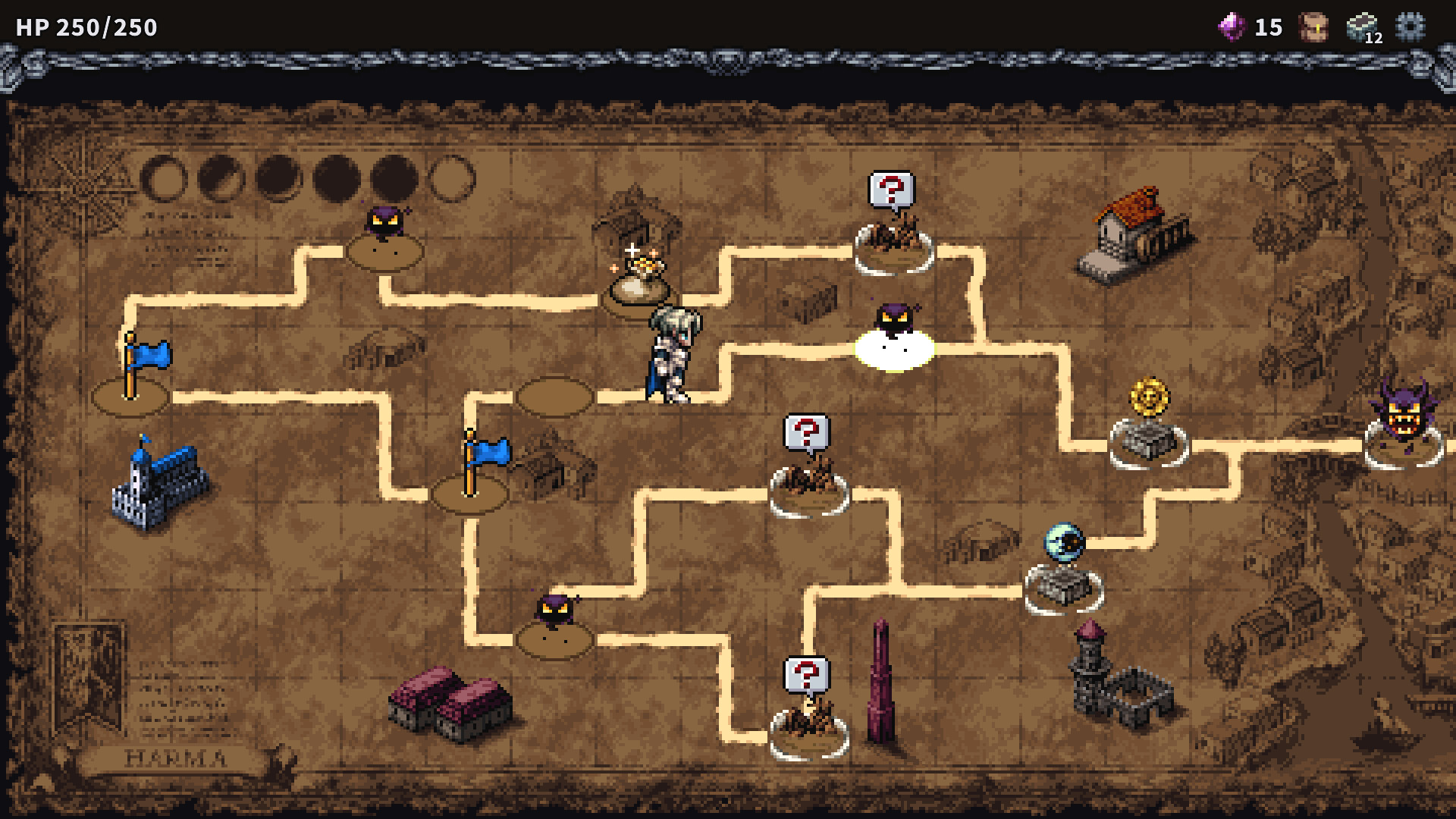
Anatomy of a run — forks, shops and events that ask a price
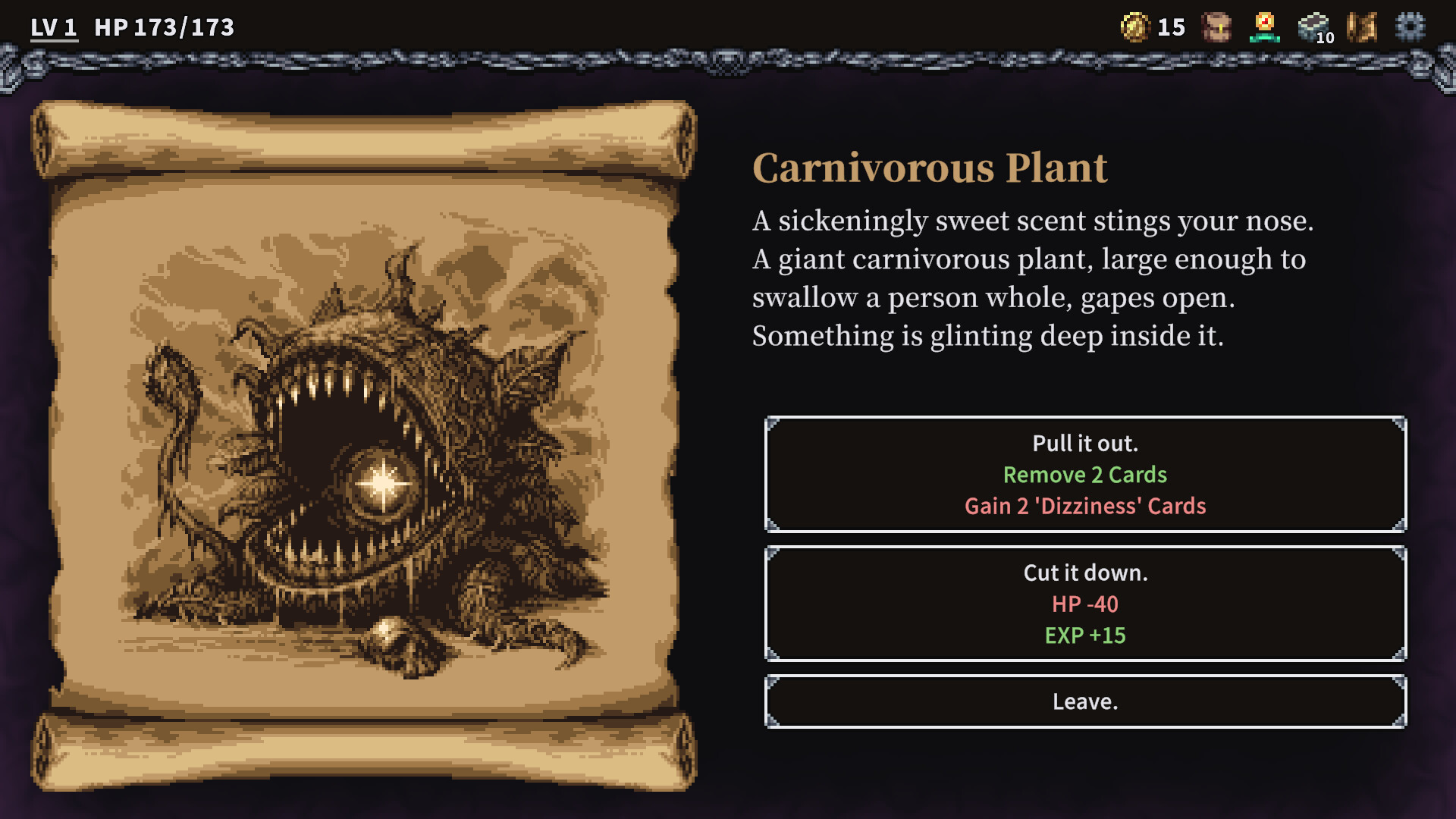
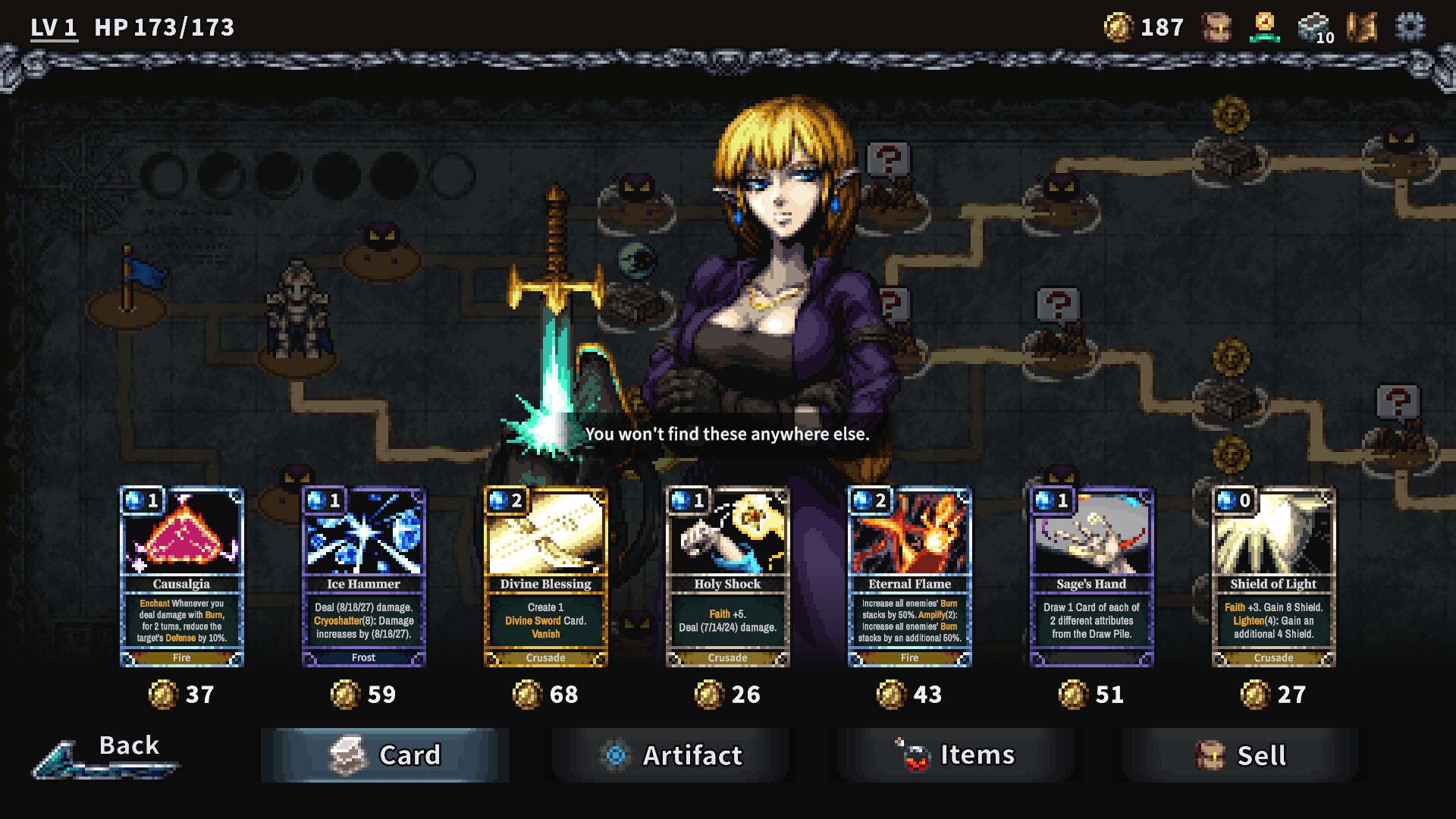
A run follows genre convention: pick your way across a branching map of fights, events and shops, collect cards and artifacts, and take on the boss. What stands out is how events make you pay. In ‘Carnivorous Plant,’ pulling something out of the plant removes two cards from your deck but adds two ‘Dizziness’ cards; cutting it down costs 40 HP for 15 EXP. Trim the deck or spend health — small calls that reshape the whole build.
- 1Pick a pathChoose the next fight, event or shop node
- 2Play cardsEvery card triggers three artifact tuning rolls
- 3Luck vs FocusLet it ride, or spend Focus to lock success
- 4RewardsNew cards and artifacts, X/Y upgrades and fusion
- 5Events & shopsTrade deck size, HP and EXP against each other
- 6BossFace the act’s boss, then move to the next act
Reconstructed by GameBus from the Steam page, screenshots and AUTOMATON’s report. Orange borders mark decision points.
A story-first deckbuilder — four acts plus the Dimensional Rift
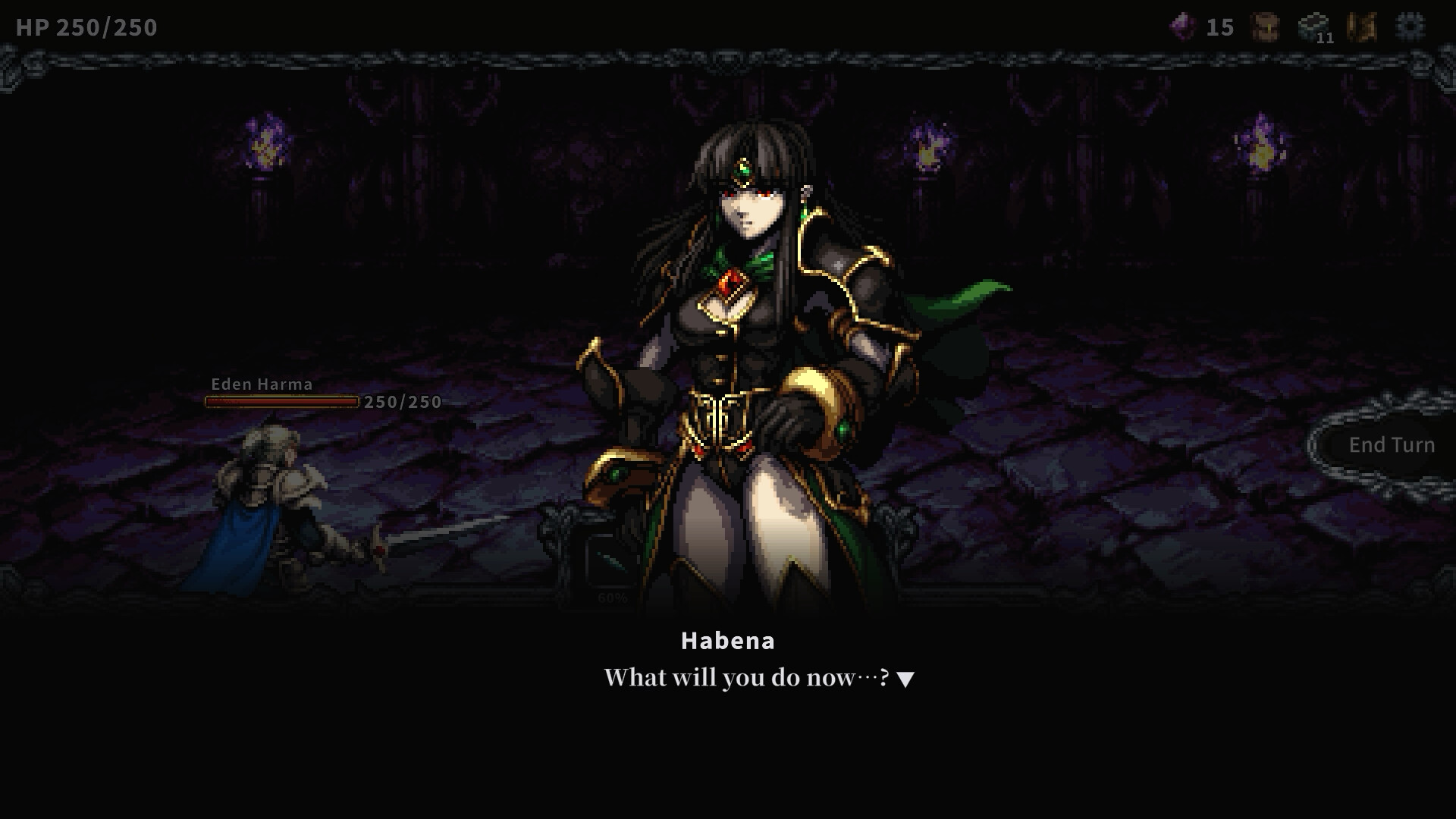
Knights of the Kingdom of Harma return from an expedition and begin slaughtering their own people. King Theron Harma, who led the expedition, has vanished, and Prince Eden, who stood against the knights to protect the people, is branded a traitor. HARMA tells this tragedy across a four-act story mode with dialogue and cinematic cutscenes. Players who just want the fights get Dimensional Rift, a replayable combat-only mode. It is built to serve both the story crowd and the build-crafters.
A game that began with Korean students in Ehime
IndirectShine is a joint team of Japanese and Korean creators. According to AUTOMATON, development is led by two Korean-born developers, Kim Gi-hoon and Lee Jun-hyung (romanized from the Japanese report), who studied at a university in Ehime Prefecture, Japan — the apps they built together as exchange students grew into this game. Kim, who says he has always loved dark, tragic stories, cites Bloodborne and Diablo as references, and the team designs around ‘easy to start, hard to master.’
- Exhibited at BitSummit X-Roads, 2022
- Fukuoka Indie Game Expo, December 2022 — Shueisha Game Creators CAMP Award
- Shueisha Game Creators CAMP ‘GAME BBQ vol.2’ — Excellence Award, demo category
- Steam demo launched November 2025 — 90% positive of 53 reviews (as reported Nov 3, 2026)
Shanghai-based Astrolabe Games is publishing. The developer says it chose Early Access to refine the game with player feedback. The Early Access build includes the first chapter of the story mode, followed by balance passes, bug fixes and content updates; a detailed roadmap will be published on launch day.
GameBus take
What looks promising
- Tuning plus Focus doesn’t remove luck — it makes ‘when to buy certainty’ a decision. A rare take on probability in deckbuilders
- Online co-op, which only 4 of the top 100 offer, with up to four players planned
- A four-act story and a combat-only mode target both narrative fans and build-crafters
- Demo at 90% positive on Steam (53 reviews) — a small sample, but a strong start
What to watch
- Early Access includes only the first chapter of the story mode
- Pricing wasn’t listed on the Steam page as of November 11
- Four-player co-op is planned for full release — confirm the Early Access player count at launch
- Focus supply has to be tuned so luck reads as strategy, not unfairness
476 roguelike deckbuilders have launched on Steam this year alone. HARMA’s pitch fits in one line: roll the dice, but buy the roll that matters — and build the run with friends. We’ll follow up when Early Access opens on November 17.
[Update, Nov 17] HARMA launched on schedule. Our launch follow-up covers price, the roadmap and what changed since this preview (Eden is the only playable hero on day one, Story Mode is slated for WAVE 11, and four-player co-op is in from day one).
Add it to your wishlist and Steam will notify you on launch day. Join the conversation with other players on GameBus.
Sources
- Steam — HARMA — Description, screenshots, specs, release date
- Steam — HARMA Demo
- AUTOMATON — HARMA Early Access on November 17 (Nov 3, 2026, Japanese) — Co-op player count, artifact examples, team, awards, demo rating
- Games Press — HARMA first public demo press release (Nov 3, 2025)
- Steam search — Roguelike Deckbuilder tag — Games only, counted Nov 11, 2026
- Steam — Slay the Spire 2
- Steam — Slay the Spire
- Steam — Balatro
- Steam — Monster Train
- Steam — Across the Obelisk
- Steam — HELLCARD
Written by the GameBus editorial team from Steam store information, the developer's public materials and Steam data we compiled ourselves. This preview was written from pre-release materials and contains no hands-on impressions.